
If you are planning to install solar panels for your home, a 3kW solar system is often the point where rooftop solar becomes a practical solution for a medium-consumption household.
But the first question most homeowners ask is simple:
What is the 3kW solar system price in India?
The answer depends on several factors, including the type of solar system, panel technology, inverter, mounting structure, roof condition, installation requirements, location and vendor.
For a residential 3kW on-grid solar system, current 2026 market references broadly place installed prices around ₹1.5 lakh–₹2.2 lakh before subsidy, although actual quotations can fall outside this range depending on specifications and installation conditions.
For eligible residential consumers, the PM Surya Ghar Muft Bijli Yojana provides central financial assistance of up to ₹78,000 for a 3kW or larger residential rooftop system, subject to applicable scheme requirements. MNRE confirms that residential consumers can receive CFA after successful installation and verification through the applicable process.
This guide explains the 3kW solar system cost, subsidy, electricity generation, specifications, installation, ROI, maintenance and buying checklist so you can compare quotations with confidence.
Quick Answer: 3kW Solar System Price in India
For a residential rooftop installation in 2026, an indicative price range is:
|
Particular |
Approximate Amount |
|
3kW On-Grid System Before Subsidy |
₹1,50,000–₹2,20,000 |
|
PM Surya Ghar Central Subsidy |
Up to ₹78,000 |
|
Approx. Cost After Subsidy |
₹72,000–₹1,42,000 |
|
Approx. Annual Generation |
3,600–5,000 units |
|
Approx. Rooftop Area |
200–300 sq. ft. |
|
Typical Payback |
Around 3–5 years* |
*Payback depends on electricity tariff, solar generation, self-consumption, net-metering arrangements, system price and other factors.
Different 2026 market references quote different installed prices, from approximately ₹1.5 lakh to above ₹2 lakh. This is why you should treat online prices as planning ranges rather than guaranteed quotations.
What Is a 3kW Solar System?
A 3kW solar system is a rooftop photovoltaic system with approximately 3 kilowatts of rated generation capacity.
A typical residential system includes:
- Solar PV modules
- Solar inverter
- Mounting structure
- DC and AC cables
- Earthing
- Electrical protection equipment
- Monitoring system
- Installation and commissioning
The solar panels convert sunlight into DC electricity. The inverter converts this electricity into AC power that can be used by household appliances.
In an on-grid system, surplus electricity can be exported to the grid according to the applicable state/DISCOM metering arrangement.
Is a 3kW Solar System Enough for a Home?
For many households with moderate electricity consumption, 3kW solar for home can be a practical size.
It can be suitable for homes using:
- Fans
- LED lights
- Refrigerator
- Television
- Washing machine
- Computers
- Water pump
- Kitchen appliances
- Air conditioner, depending on usage
A 3kW system does not mean that every appliance can run simultaneously at full power throughout the day.
The correct system size should be based on your monthly electricity consumption, not simply the number of rooms in your house.
A 3kW system may be suitable if:
- Your monthly consumption is roughly in the 250–450 unit range
- You have adequate shadow-free roof space
- You want to reduce grid electricity consumption
- You have moderate daytime electricity demand
If your consumption is significantly higher, consider comparing a 5kW solar system before making a final decision.
3kW Solar System Price Breakdown
A complete solar installation consists of several components.
An indicative cost structure for a residential 3kW on-grid system may look like this:
|
Component |
Indicative Share / Cost |
|
Solar panels |
₹55,000–₹90,000 |
|
3kW solar inverter |
₹25,000–₹40,000 |
|
Mounting structure |
₹10,000–₹18,000 |
|
DC/AC cables & protection |
₹8,000–₹15,000 |
|
Earthing & safety equipment |
₹4,000–₹8,000 |
|
Installation & commissioning |
₹8,000–₹15,000 |
|
Other applicable charges |
Varies |
|
Typical installed system |
₹1.5–₹2.2 lakh |
These figures are indicative. Current market guides show different price bands depending on equipment quality, city, roof complexity and what is included in the quotation.
Why can two 3kW systems have very different prices?
Because a 3kW system is not simply three 1kW panels.
The quotation can vary because of:
- Panel technology
- Panel wattage
- Inverter brand
- Inverter features
- Mounting structure
- Cable quality
- Protection equipment
- Roof height
- Roof type
- Installation complexity
- Warranty
- After-sales service
3kW Solar Panel Price in India
The 3kW solar panel price depends on how many panels are used and the wattage of each module.
For example:
|
Panel Wattage |
Approx. Panels for 3kW |
|
400W |
8 panels |
|
450W |
7 panels |
|
500W |
6 panels |
|
540W |
6 panels |
|
550W |
6 panels |
Six 550W panels provide 3.3kWp of DC module capacity.
This is not necessarily a problem. Solar designers may use a DC array larger than the inverter's AC rating within the inverter manufacturer's permitted operating range.
Therefore, when comparing quotations, check both:
Total panel capacity (kWp) and inverter AC capacity (kW).
Which Solar Panel Technology Is Best for a 3kW System?
Three technologies you may encounter are:
Mono PERC
Mono PERC is a mature solar cell technology that offers good efficiency and is widely used in rooftop installations.
It can be a cost-effective choice when roof space is adequate.
TOPCon
TOPCon is a newer high-efficiency cell technology.
Potential advantages include:
- Higher module efficiency
- Better use of limited roof space
- Improved performance characteristics
TOPCon panels can cost more than basic alternatives.
Bifacial Panels
Bifacial modules can generate electricity from both the front and rear sides under suitable conditions.
Their benefit depends heavily on:
- Mounting height
- Surface reflectivity
- Installation design
- Available rear-side light
Don't pay a premium for bifacial technology unless your installation conditions allow you to benefit from it.
3kW Solar Inverter Price and Specifications
The inverter is one of the most important components of a solar system.
A typical 3kW solar inverter price can vary according to:
- Brand
- Efficiency
- MPPT configuration
- Monitoring
- Protection features
- Warranty
- Grid compatibility
When comparing a quotation, check:
Rated AC Output
The inverter should be appropriately sized for the system design.
Maximum DC Input
This tells you how much PV capacity the inverter can accept.
MPPT Range
MPPT allows the inverter to operate the solar array near its optimum power point.
Number of MPPTs
Multiple MPPTs can be useful for rooftops with different orientations or more complex shading conditions.
Monitoring
A monitoring app or web portal can help you track:
- Daily generation
- Monthly generation
- System performance
- Fault alerts
3kW Solar System Subsidy Under PM Surya Ghar
The PM Surya Ghar Muft Bijli Yojana provides central financial assistance for eligible residential rooftop solar systems.
Under the central assistance structure, the first 2kW receives ₹30,000 per kW and the third kW receives ₹18,000.
Therefore:
₹30,000 + ₹30,000 + ₹18,000 = ₹78,000
So an eligible 3kW residential system can receive up to ₹78,000 in central financial assistance under the applicable scheme.
Subsidy structure
|
Solar Capacity |
Central Financial Assistance |
|
1kW |
₹30,000 |
|
2kW |
₹60,000 |
|
3kW |
₹78,000 |
|
Above 3kW |
Maximum ₹78,000 |
The subsidy should not be treated as a universal discount available to every solar installation. Eligibility, vendor requirements, installation conditions and DISCOM verification matter.
MNRE states that CFA is transferred after successful installation and verification under the applicable process.
3kW Solar System Price After Subsidy
Suppose your complete 3kW on-grid installation quotation is:
₹1,80,000
Applicable central subsidy:
₹78,000
Indicative net investment:
₹1,02,000
If another installer quotes:
₹2,10,000
The same subsidy would result in:
₹1,32,000
This demonstrates why you should compare the complete quotation, not just the amount after subsidy.
A cheaper system may use different components or exclude certain costs.
How to Apply for 3kW Solar Subsidy
The government rooftop solar programme provides an application and verification process through the National Portal and/or applicable DISCOM mechanism. MNRE states that residential consumers can apply through the National Portal or state DISCOM process, with CFA handled after successful installation and verification under the applicable mechanism.
A simplified process is:
Step 1: Register
Provide the required electricity connection and consumer information.
Step 2: Submit the Application
Complete the rooftop solar application through the applicable official process.
Step 3: Complete DISCOM Requirements
Follow the applicable feasibility and approval process.
Step 4: Select the Appropriate Vendor
Use the vendor process specified under the scheme.
Step 5: Install the System
The solar installation is completed according to the applicable requirements.
Step 6: Inspection and Metering
The DISCOM completes the required inspection, commissioning and metering process.
Step 7: CFA/Subsidy Processing
The applicable central financial assistance is processed after the required conditions are fulfilled.
Always verify the current process on the official government portal before paying an installer.
How Much Electricity Does a 3kW Solar System Generate?
One of the most important questions before buying solar is:
How many units does a 3kW solar system generate?
A well-designed 3kW rooftop system can produce roughly 10–15 units per day under favourable conditions, but generation varies considerably by location, season, weather, shading and system losses.
A reasonable planning range is:
|
Period |
Indicative Generation |
|
Daily |
10–15 units |
|
Monthly |
300–450 units |
|
Annual |
3,600–5,000+ units |
Current 2026 market guides commonly use generation ranges around 300–450 units per month for 3kW systems.
Important:
These are estimates, not guarantees.
A 3kW system installed in Rajasthan may generate differently from one installed in a heavily shaded rooftop in a humid or cloudy region.
Actual generation depends on:
- Solar irradiation
- Latitude and location
- Panel orientation
- Tilt angle
- Shading
- Temperature
- Dust
- Panel technology
- Inverter efficiency
- Cable losses
- System downtime
How Many Solar Panels Are Needed for 3kW?
The number depends on the panel wattage.
For example:
6 × 550W = 3.3kWp
or
6 × 540W = 3.24kWp
or
8 × 400W = 3.2kWp
Modern high-wattage panels can reduce the number of physical modules required.
However, fewer panels do not automatically mean a better system.
Compare:
- Total DC capacity
- Module efficiency
- Dimensions
- Warranty
- Temperature coefficient
- Inverter compatibility
- Installation layout
3kW Solar System Rooftop Area Required
A 3kW rooftop system generally requires approximately:
200–300 sq. ft. of usable, shadow-free roof area
Some installations may require more or less depending on module dimensions and layout.
Roof assessment should consider:
- Water tanks
- Parapet walls
- Trees
- Adjacent buildings
- Chimneys
- Antennas
- Maintenance access
- Panel row spacing
The important measurement is not your total roof area.
It is your usable shadow-free area.
On-Grid vs Hybrid vs Off-Grid 3kW Solar System
The system type has a major impact on both price and functionality.
3kW On-Grid Solar System
An on-grid system connects to the electricity grid and normally operates without batteries.
Advantages
- Lowest upfront cost
- No battery replacement
- Good for electricity bill reduction
- Simple system architecture
- Suitable for homes with reliable grid supply
Disadvantage
A standard grid-connected inverter generally shuts down when the grid goes down because of anti-islanding safety requirements.
So an on-grid solar system does not provide power backup during a grid outage.
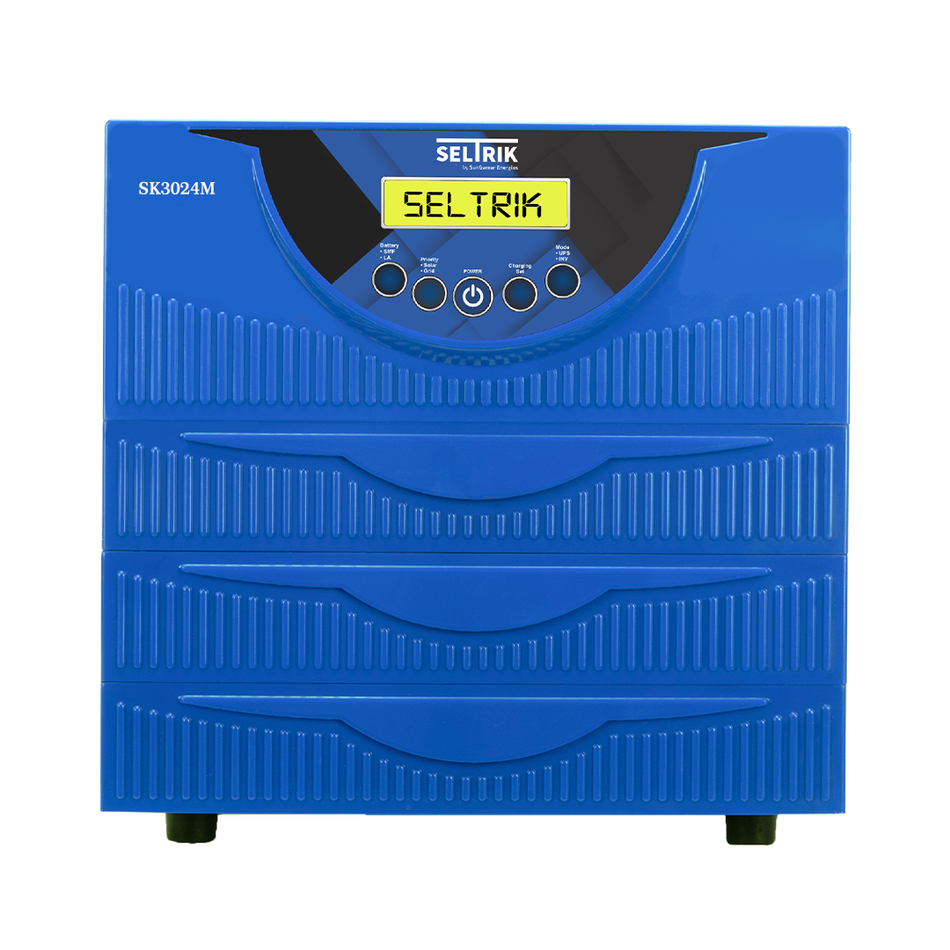
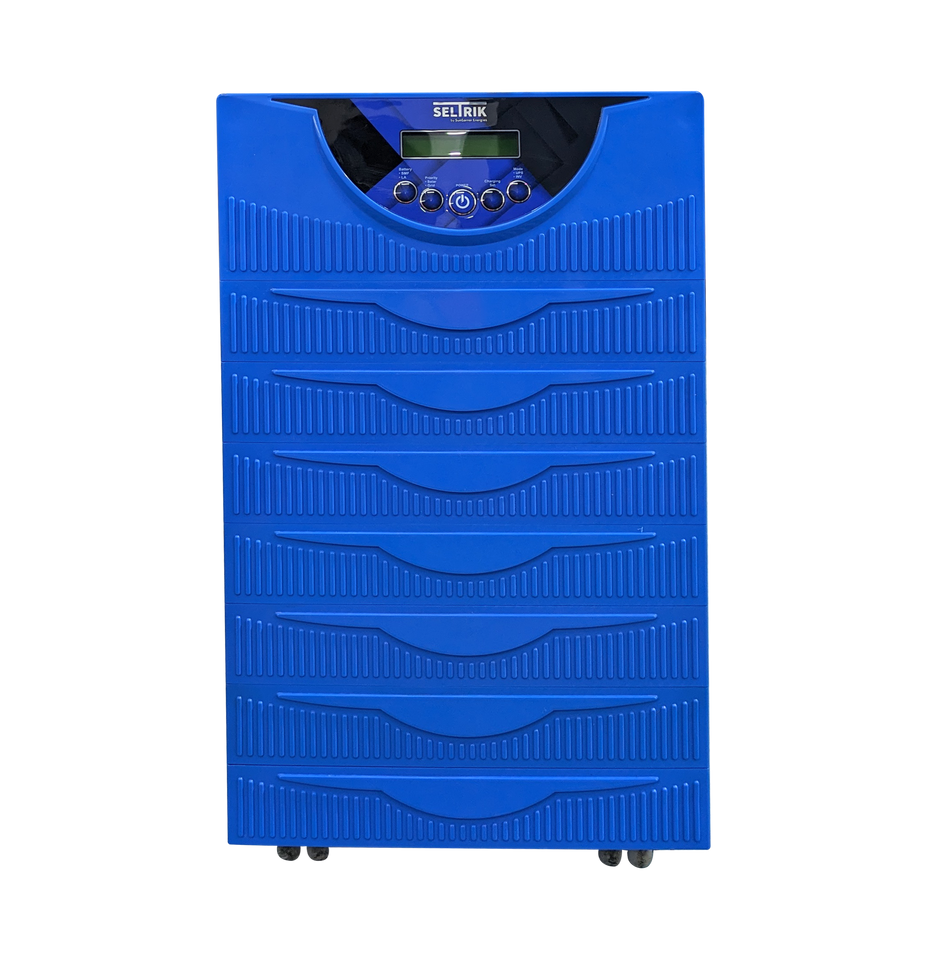
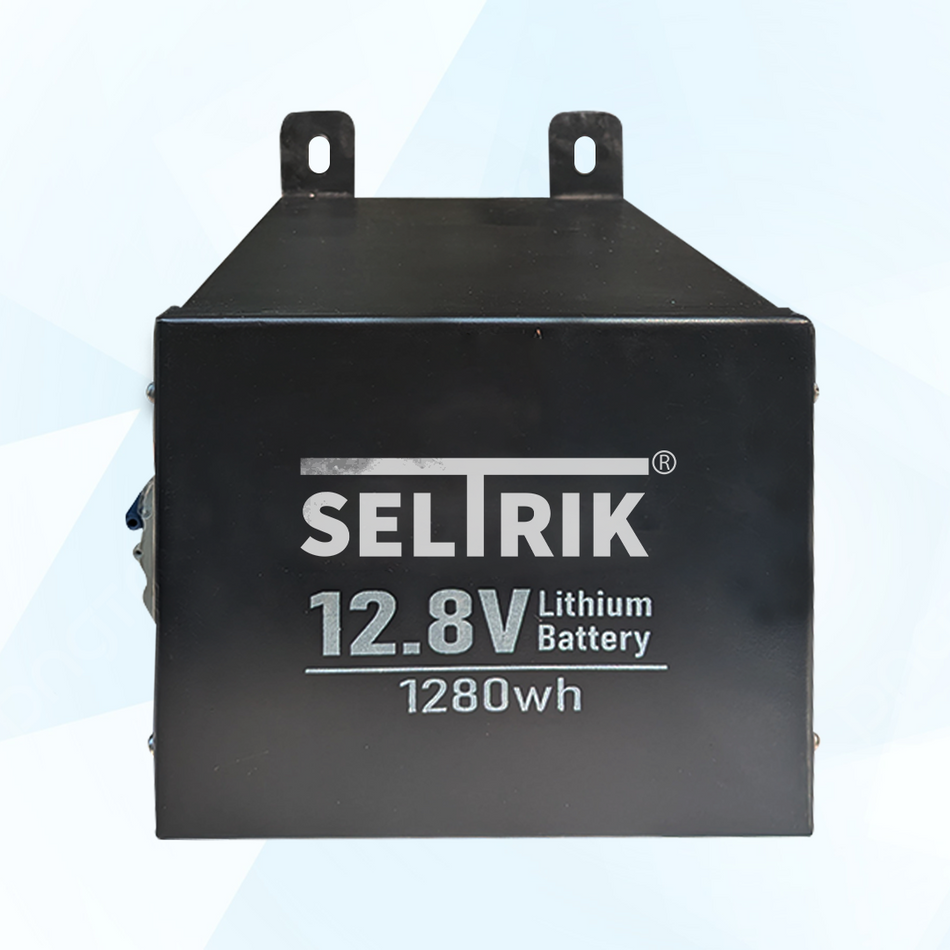
3kW Hybrid Solar System
A hybrid system combines:
Solar + Battery + Grid
The battery can provide backup to selected loads during power cuts when the system is correctly designed.
Benefits
- Backup during outages
- Solar energy storage
- Greater energy flexibility
- Reduced dependence on the grid
Drawbacks
- Higher initial investment
- Battery replacement cost
- More complex installation
- Longer payback compared with basic on-grid solar
If your main objective is reducing electricity bills and you have reliable grid power, on-grid solar is usually the more economical option.
3kW Off-Grid Solar System
An off-grid solar system operates without relying on the utility grid.
It generally requires:
- Solar panels
- Off-grid inverter
- Battery bank
- Mounting structure
- Protection equipment
- Cabling
Because batteries significantly increase system cost, a 3kW off-grid solar system can cost considerably more than an on-grid system.
It is better suited to:
- Remote locations
- Farmhouses
- Properties without reliable grid access
3kW Solar System Specifications: What Should You Check?
Before purchasing, compare the following technical specifications.
Solar Panel Efficiency
Higher-efficiency modules can produce more power from a limited roof area.
For a 3kW rooftop system, check:
- Module efficiency
- Rated power
- Temperature coefficient
- Warranty
- Degradation rate
- Manufacturer specifications
Product vs Performance Warranty
Don't confuse these two warranties.
Product Warranty
Covers specified manufacturing or material defects.
Performance Warranty
Describes the expected power output over the module's operating life.
A long performance warranty does not mean that every component of your solar system is covered for the same period.
Mounting Structure
The mounting structure supports the solar panels and must be appropriate for your roof and local conditions.
Check:
- Material
- Corrosion resistance
- Wind-load suitability
- Roof attachment method
- Fasteners
- Waterproofing
- Structural integrity
A low-quality structure can create problems even when the panels themselves are excellent.
Electrical Protection
A complete quotation should clearly specify electrical safety equipment.
Depending on the system design, this may include:
- DC isolators
- AC protection
- Surge protection
- Earthing
- Lightning protection where required
- Appropriate cable sizing
Ask the installer to list these items separately rather than simply writing "electrical accessories."
3kW Solar System ROI and Payback Period
The solar ROI depends on the relationship between your investment and annual electricity savings.
A basic calculation is:
Payback Period = Net Investment ÷ Annual Electricity Savings
Example
Suppose:
System price: ₹1,80,000
Central subsidy: ₹78,000
Net investment: ₹1,02,000
Assume annual generation of:
4,200 units
If the effective value of the electricity offset is:
₹7/unit
Annual electricity value:
4,200 × ₹7 = ₹29,400
Estimated simple payback:
₹1,02,000 ÷ ₹29,400 ≈ 3.5 years
This is an illustrative example, not a guaranteed financial return.
Your actual payback may differ because of:
- Electricity tariff
- Self-consumption
- Export compensation
- Fixed charges
- Seasonal generation
- System degradation
- Maintenance
- Initial installation price
How Much Can a 3kW Solar System Save?
Suppose your system generates around 350 units per month.
At an effective electricity value of ₹6/unit:
350 × ₹6 = ₹2,100/month
At ₹8/unit:
350 × ₹8 = ₹2,800/month
At ₹10/unit:
350 × ₹10 = ₹3,500/month
However, this does not mean your electricity bill will automatically become zero.
Your bill can still include:
- Fixed charges
- Demand-related charges where applicable
- Taxes
- Meter-related charges
- Other DISCOM charges
The actual savings also depend on whether electricity is consumed directly or exported to the grid.
Can a 3kW Solar System Run an AC?
Yes, a 3kW system can support AC usage under suitable conditions, but the answer depends on the AC's power consumption and the rest of the household load.
For example, during strong sunlight, a 3kW system may produce enough electricity to support an efficient AC along with some household appliances.
But solar output changes throughout the day.
If you regularly use:
- Multiple ACs
- Geysers
- Water pumps
- Electric cooking appliances
a larger system may be more appropriate.
Best approach:
Check your electricity bills and calculate your actual monthly consumption before choosing the system size.
3kW Solar System Lifespan
Solar panels are designed for long-term operation, with many products offering long performance warranties.
However, the complete system does not have a single lifespan.
Typical expectations are:
|
Component |
Typical Service Expectation |
|
Solar panels |
25+ years |
|
On-grid inverter |
Around 10–15 years |
|
Mounting structure |
20+ years with suitable material and maintenance |
|
Around 10–12 years, depending on chemistry/use |
Actual lifespan depends on product quality, environmental conditions and maintenance.
3kW Solar System vs 2kW vs 5kW
If you're unsure about system capacity, compare your options.
|
Feature |
2kW Solar System |
3kW Solar System |
5kW Solar System |
|
Approx. annual generation |
2,800–3,600 units |
3,600–5,000 units |
6,000–8,000+ units |
|
Approx. roof area |
150–220 sq. ft. |
200–300 sq. ft. |
350–500 sq. ft. |
|
Central subsidy |
₹60,000* |
Up to ₹78,000* |
Up to ₹78,000* |
|
Suitable for |
Moderate loads |
Medium households |
Higher consumption |
|
Regular AC use |
Limited |
Better suited |
More suitable |
|
Battery required for on-grid? |
No |
No |
No |
*Subject to applicable PM Surya Ghar eligibility and current scheme rules.
The 3kW system is particularly attractive for eligible residential consumers because it reaches the current central subsidy ceiling of ₹78,000.
How to Choose the Right 3kW Solar Installer
The installer is just as important as the equipment.
Before signing the contract, check:
1. Experience
Ask how many rooftop projects they have completed.
2. Itemised Quotation
The quotation should clearly identify:
- Panel model
- Panel wattage
- Inverter model
- Structure
- Cables
- Protection equipment
- Installation
- Metering/DISCOM support
- GST
3. Warranty
Get written warranty information for:
- Panels
- Inverter
- Structure
- Installation workmanship
4. After-Sales Service
Ask:
- Who handles inverter faults?
- How quickly is service provided?
- Is AMC available?
- Are replacement parts locally available?
5. Site Survey
A professional installer should assess the roof before finalising the system.
3kW Solar System Buying Checklist
Before making the payment, confirm:
Price
☐ Is GST included?
☐ Is installation included?
☐ Is transportation included?
☐ Is the mounting structure included?
☐ Is wiring included?
☐ Are protection devices included?
☐ Are applicable meter/DISCOM charges included?
Panels
☐ Panel brand and exact model specified?
☐ Panel wattage specified?
☐ Efficiency specified?
☐ Product warranty specified?
☐ Performance warranty specified?
Inverter
☐ Exact inverter model mentioned?
☐ AC capacity confirmed?
☐ MPPT configuration checked?
☐ Monitoring included?
☐ Warranty confirmed?
Installation
☐ Roof survey completed?
☐ Shading checked?
☐ Structure material specified?
☐ Earthing included?
☐ Surge protection included?
Subsidy
☐ Eligibility verified?
☐ Applicable vendor process confirmed?
☐ Latest government requirements checked?
☐ Subsidy calculation documented?
Common Mistakes to Avoid
Mistake 1: Choosing the Cheapest Quote
A lower quote may exclude important components or use lower-cost equipment.
Always compare the complete bill of materials.
Mistake 2: Believing "3kW" Guarantees 3kW Every Hour
Solar output changes according to sunlight.
A 3kW system has a rated capacity; it does not produce exactly 3kW throughout the day.
Mistake 3: Ignoring Roof Shading
Even partial shading can reduce system output.
Mistake 4: Assuming Solar Means Backup
A standard on-grid system does not provide electricity during a grid outage.
Mistake 5: Looking Only at Panel Price
Panels are only one part of the total installation.
Mistake 6: Assuming the Electricity Bill Will Always Become Zero
Solar can significantly reduce the energy component of your bill, but fixed and other applicable charges may remain.
Final Verdict
For many Indian households, a 3kW solar system is a practical middle ground between system size, rooftop space, investment and electricity savings.
An indicative 2026 residential on-grid installation can cost around:
₹1.5 lakh–₹2.2 lakh before subsidy
For eligible residential consumers, the central PM Surya Ghar financial assistance can reach:
₹78,000
This can bring the indicative net investment to approximately:
₹72,000–₹1.42 lakh
depending on the actual system quotation.
A properly designed 3kW system can generate approximately 3,600–5,000 units per year, although actual generation depends on location, roof orientation, shading, weather and system losses.
The most important point is this:
Don't buy a 3kW solar system simply because it receives the maximum subsidy. Buy it because it matches your electricity consumption.
Before signing a quotation, compare at least two or three installers and check the complete system specifications, panel and inverter warranties, structure quality, electrical protection, installation scope, after-sales service and subsidy eligibility.
For current government requirements, always verify the latest information through MNRE and the official PM Surya Ghar/National Rooftop Solar process, because scheme procedures and eligibility requirements can change. MNRE's current rooftop-solar information confirms that residential CFA is linked to the applicable installation, empanelled-vendor and DISCOM verification process.
Frequently Asked Questions
What is the 3kW solar system price in India in 2026?
An indicative residential 3kW on-grid solar system can cost approximately ₹1.5 lakh–₹2.2 lakh before subsidy. Actual prices vary by panel technology, inverter, location, roof conditions and installation scope.
What is the 3kW solar system price after subsidy?
With the maximum central residential subsidy of ₹78,000, an installation priced at ₹1.5 lakh–₹2.2 lakh would have an indicative net cost of approximately ₹72,000–₹1.42 lakh.
The actual amount depends on your final quotation and eligibility.
How much subsidy is available for a 3kW solar system?
Eligible residential consumers can receive up to ₹78,000 in central financial assistance for a 3kW system under the applicable PM Surya Ghar framework.
How many units does a 3kW solar system generate per day?
A 3kW system may generate approximately 10–15 units per day under favourable conditions. Actual production varies according to location, season, weather, shading and system design.
How many solar panels are needed for 3kW?
With 540W–550W modules, approximately six panels can provide around 3.2–3.3kWp of DC capacity. The exact system configuration depends on the inverter and installation design.
How much roof space is required for a 3kW solar system?
A reasonable planning estimate is around 200–300 sq. ft. of usable, shadow-free rooftop area. The exact requirement depends on panel dimensions and installation layout.
Can a 3kW solar system run an AC?
Yes, depending on the AC's efficiency, power consumption, sunlight availability and other loads operating at the same time. If AC use is high, a larger system may be more suitable.
Is a 3kW solar system enough for a 3 BHK home?
It can be enough for a 3 BHK home with moderate electricity consumption. The number of bedrooms alone should not determine system size. Review your electricity consumption before buying.
Which is better: 3kW on-grid or hybrid solar?
For reducing electricity bills, an on-grid system is generally more economical.
For backup during power cuts, a hybrid system with suitable battery storage is more appropriate.
Does a 3kW on-grid solar system work during a power cut?
Normally, no. A standard grid-connected inverter shuts down during a grid outage for safety. A properly designed hybrid/backup system is required if you want selected loads to continue operating during outages.
How long does a 3kW solar system last?
Solar panels are designed for long-term operation and commonly have long performance warranties. The inverter generally has a shorter service life and may require replacement before the panels.